Alberobello And Matera Tour From Bari
Tours & tickets

Hand-picked by our editors — only the best 5 tours from 47 reviewed

Open today 09:00–19:30
Attendance: Moderate — summer season
Arriving early helps navigate the historic districts before midday heat and peak tour bus crowds.
Free cancellation Instant confirmation Mobile voucher Verified partner Skip-the-line
Tickets

Choose your ticket

Verified partners for every tour, free cancellation where available, and instant confirmation on every booking.

Matera & Alberobello UNESCO Heritage Day Trip 10 hr
Guided Experience

Matera & Alberobello UNESCO Heritage Day Trip

★ 4.7 (133)
€36
per person
Instant Mobile voucher Flexible — change up to 24h

Explore two ancient UNESCO treasures in Puglia and Basilicata with guided transport and extended free time

Reserve
Matera & Alberobello Day Trip with Onboard Tour Leader 10 hr
Guided Experience

Matera & Alberobello Day Trip with Onboard Tour Leader

★ 4.6 (307)
€33
per person
Instant Mobile voucher Flexible — change up to 24h

Experience two UNESCO World Heritage sites in one day with comfortable coach transport and expert guidance

Reserve

Prices from verified partners. Availability updates in real time at checkout. Free cancellation policies apply where shown.

Highlights

What you'll see inside the attraction

The landmarks, rooms, and views travelers on this tour remember — all visible on a single visit.

Trulli of Alberobello

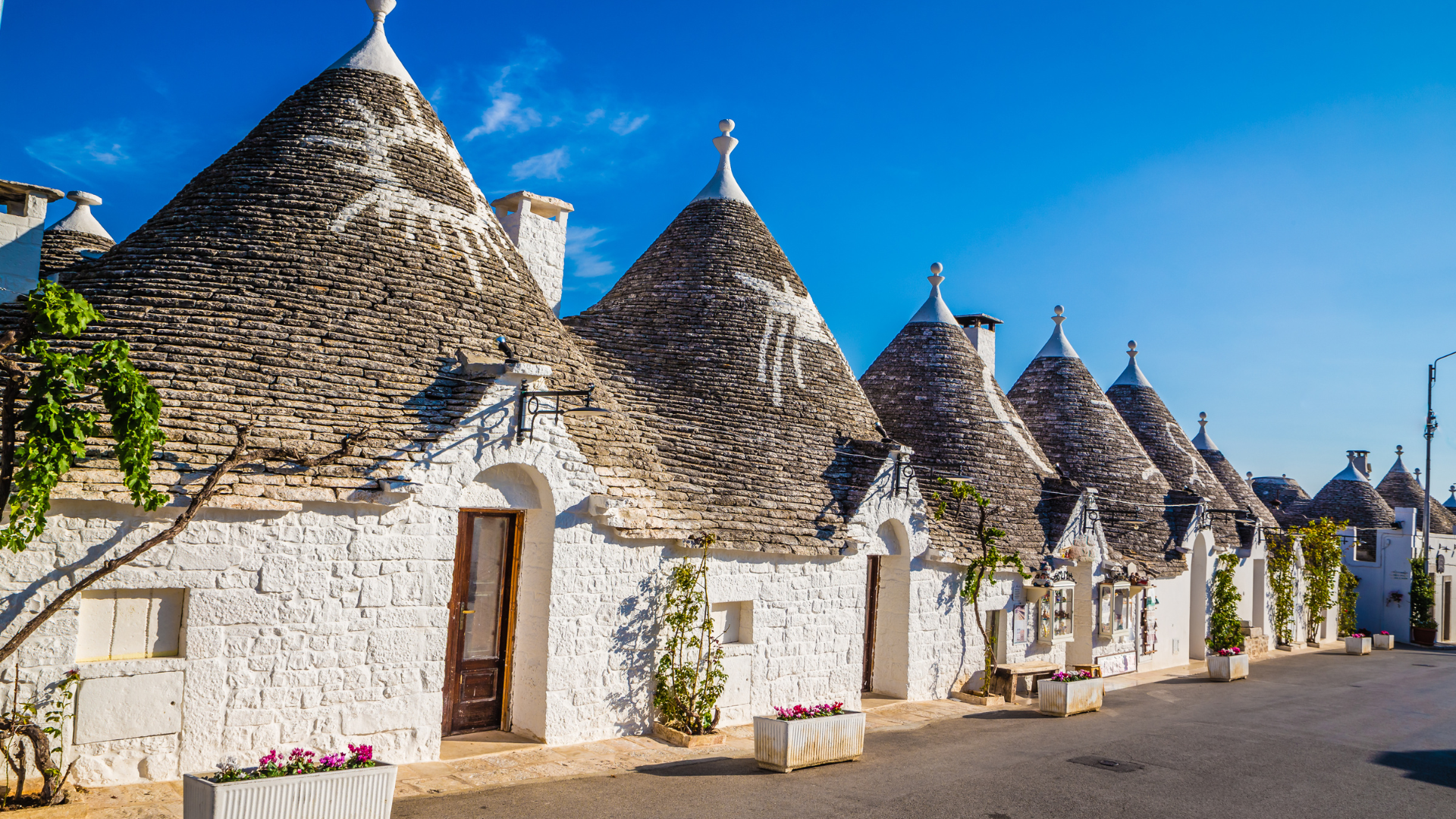
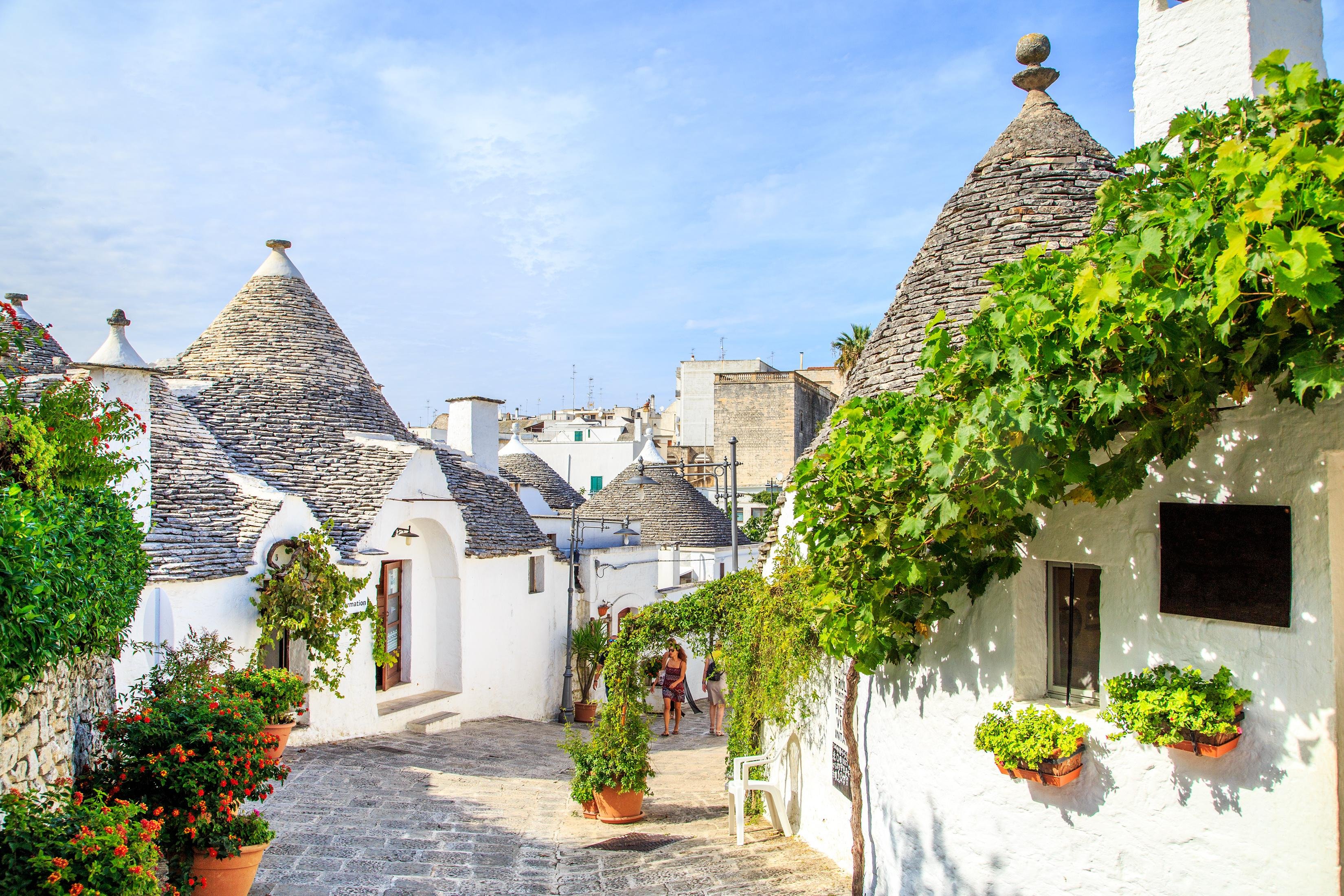
These dry-stone dwellings with conical roofs are a UNESCO-listed architectural marvel unique to the Itria Valley. Thousands of these structures create a distinct fairy-tale skyline.

Sassi di Matera

The Sassi are ancient cave dwellings carved into limestone cliffs, inhabited for thousands of years. They form a dramatic labyrinth of stone across two natural amphitheaters.

Trullo Sovrano

Known as the largest trullo in Alberobello, this two-story building offers a rare look at historical living conditions. It serves as a prime example of dry-stone construction.

Casa Grotta

These preserved cave homes show how families lived in Matera before the 1950s relocation. They provide a poignant look at the daily life of the Sassi.

Rock-hewn Churches

Hidden within the canyons of Matera, these ancient churches feature original frescoes dating back to the Byzantine period. They highlight the spiritual history of the region.

Head to head

Alberobello and Matera Private Bus Tour from Bari vs. Renting a Car

Professional transport is superior for those prioritizing seamless navigation, while renting a car provides total autonomy for travelers exploring Puglia and Basilicata at their own pace.

Feature Top pick Private Bus Tour Rental Car
Navigational ease
Self-managed mapping
Historical context provided
Self-guided research
Cost efficiency
Fuel, toll, and rental costs
Flexibility of schedule
Complete temporal control
Driving and parking stress
High; restricted ZTL zones
Travel convenience
Requires active driving focus

Verdict: If you prefer deep cultural immersion without the logistical burden of navigating Italian road networks, an alberobello and matera private bus tour from bari tour is the ideal choice for your UNESCO heritage visit; conversely, renting a car offers unmatched personal freedom for independent travelers, though securing your alberobello and matera private bus tour from bari tickets can simplify your planning when choosing a structured journey over the complexity of self-guided alberobello and matera private bus tour from bari tours.

How your ticket works

Book your ticket in 3 steps

  1. 01

    Book online

    Choose your ticket, select your date, and reserve in under two minutes. Secure checkout handled by our verified partner.

  2. 02

    Receive your mobile voucher

    Instant confirmation by email, with a mobile voucher you can save offline. No printing, no queuing at a collection desk.

  3. 03

    Show & enter

    Arrive at the entrance, show your voucher on your phone, and walk in. Most tickets include priority or skip-the-line access.

Plan your visit

Everything you need to know before you go

Practical details for your visit straight from our verified partners — hours, access, rules, and how to get there.

Open today · 09:00–19:30
Opening hours
09:00–19:30
Address
Alberobello and Matera, Puglia and Basilicata, Italy
Accessibility
Historic centers involve steep, uneven stone pathways; check local tour operator for specific mobility assistance.
Best arrival window
09:00–10:00
Luggage
Coaches have storage for day bags; large suitcases may require pre-arrangement.
Mon
09:00–19:30
Tue
09:00–19:30
Wed
09:00–19:30
Thu
09:00–19:30
Fri
09:00–19:30
Sat
09:00–19:30
Sun
09:00–19:30
Location

Address
Alberobello and Matera, Puglia and Basilicata, Italy
Luggage
Coaches have storage for day bags; large suitcases may require pre-arrangement.

Dress code

Wear comfortable walking shoes with good grip for navigating cobblestones and rock-hewn steps. Modest attire is recommended when entering local churches.

Bags & security

Keep personal belongings secure in small backpacks or crossbody bags while exploring the dense, labyrinthine streets. Avoid bringing large, cumbersome luggage on the bus.

Photography

Photography is highly encouraged in the Sassi and among the trulli, though please respect residents' privacy by not entering marked private homes. Aerial drone use is restricted without permits.

Accessibility

Due to the ancient nature of Sassi and trulli districts, pathways are uneven, steep, and often include stairs, making them challenging for wheelchairs.

Mobile phones

Mobile coverage is generally stable, but download offline maps as stone walls in cave districts can occasionally interfere with signal strength.

What to bring

  • Comfortable walking shoes
  • Sun hat and sunscreen
  • Reusable water bottle
  • Camera
  • Offline maps
  • Light jacket for cave visits

Not allowed

  • Large suitcases
  • Professional photography gear
  • Drones
  • Alcoholic beverages
  • Sharp objects
  • Flammable materials
  • Loud speakers
  • Strollers in narrow caves

Families & strollers

Families are welcome, but be aware that the uneven stone surfaces and tight stairways in the historic centers are not ideal for standard strollers.

Food & drink

Local delicacies like taralli and focaccia are available; bring a reusable water bottle as fountains are accessible in both towns.

Pets

Small pets are typically allowed on private bus transfers if secured in a carrier, but verify with your specific tour operator.

Good to know

The alberobello and matera private bus tour from bari includes essential transit to ensure you visit both UNESCO landmarks efficiently.

Around your visit

Everything else worth knowing

Best time to go, insider tips, nearby landmarks, and the cancellation fine print — flip through to skim what matters to you.

Cancellation policy

Flexible, no hidden fees.

Full refunds are typically available for cancellations made 24-48 hours in advance. Entry to historic centers is 0 EUR, so tour costs cover transport and optional guided services only.

About

The place, in context

Alberobello's 1,500 limestone trulli—whitewashed cone-roofed dwellings rising like a field of stone mushrooms—were built without mortar in the seventeenth century so landowners could dismantle them quickly and evade taxation. The technique, inherited from prehistoric tholos construction, transformed necessity into a UNESCO-recognized architectural tradition that now defines the Itria Valley. Sixty kilometres southeast, Matera's Sassi districts—carved into a limestone ravine overlooking the Gravina torrent—represent 9,000 years of continuous human habitation, making it one of the world's oldest continuously occupied settlements. Both sites earned World Heritage designation in the 1990s, yet their preservation journeys diverged: Alberobello remained inhabited and tourist-friendly, while Matera's cave dwellings were forcibly evacuated in 1952 due to disease and poverty, left abandoned until a painstaking restoration began in the 1980s. The alberobello and matera private bus tour from bari bridges two distinct chapters of southern Italian vernacular architecture within a single day. Alberobello's Rione Monti and Aia Piccola quarters contain roughly 1,400 trulli, many still functioning as homes, workshops, and boutique hotels. Their conical roofs—built from stacked limestone slabs called chiancarelle—shed rainwater efficiently in a region where clay tiles were once reserved for noble estates. Painted pinnacles and cryptic symbols crown many roofs; theories range from Christian iconography to pagan protective signs, though definitive scholarly consensus remains elusive. The Trullo Sovrano, a rare two-storey example completed in the eighteenth century, now operates as a museum displaying period furnishings and agricultural tools. Matera's Sassi di Matera comprise the Sasso Caveoso and Sasso Baranesco districts, where rock-hewn churches, cisterns, and dwellings stack along the ravine's natural terraces. More than 150 rupestrian churches—some decorated with Byzantine frescoes dating to the eighth century—dot the landscape, evidence of monastic communities that sought refuge from Iconoclast persecution. The Casa Grotta, a preserved cave dwelling in Sasso Caveoso, recreates the cramped living conditions of a mid-twentieth-century peasant family: one room shared by humans and livestock, no running water, infant mortality rates near fifty percent. That deprivation—documented in Carlo Levi's 1945 memoir Christ Stopped at Eboli—prompted the Italian government's controversial 1952 resettlement, relocating 15,000 residents to modernist housing estates on the plateau above. Today the Sassi host boutique cave hotels, restaurants carved into former stables, and film locations—Mel Gibson shot The Passion of the Christ here in 2003, and the district served as a stand-in for ancient Jerusalem in multiple productions. The 2019 designation as European Capital of Culture accelerated gentrification, raising concerns about balancing tourism revenue with authentic community preservation. The two sites together illustrate southern Italy's capacity to transform marginal landscapes—arid limestone plateaus and erosion-carved ravines—into habitable space through ingenuity, though the human cost of such adaptation only recently entered public memory.

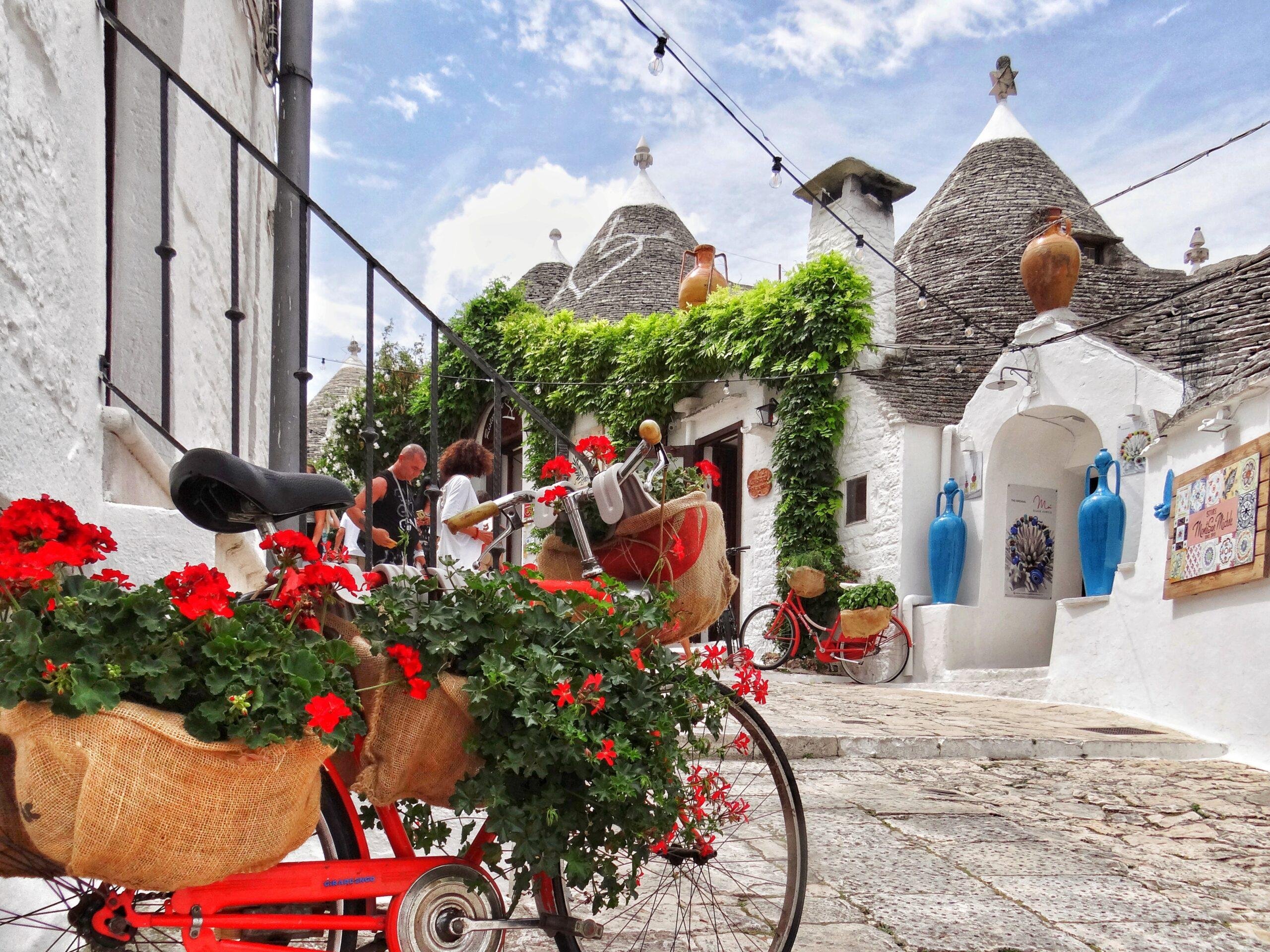
"Alberobello's 1,500 limestone trulli were built without mortar so landowners could dismantle them quickly and evade taxation."
Your experience

What a tour day looks like

A step-by-step walkthrough of the visit — what you'll see, how long each stage takes, and the details that matter.

You depart Bari by 9:00 AM, heading inland through olive groves and vineyards that checker the Murge plateau. The first trulli appear as roadside curiosities before Alberobello materializes—a hillside forest of whitewashed cones. You walk the narrow lanes of Rione Monti, where roughly 1,000 trulli cluster in concentric rings, their limestone roofs fitted without cement. Shopkeepers sell handmade ceramics and local wines beneath cool stone vaults; you pause at the Trullo Sovrano to see how a prosperous merchant family arranged two floors within the conical structure. After lunch in the Itria Valley, the coach climbs toward Basilicata's border. Matera announces itself suddenly—a limestone canyon sliced by the Gravina River, its flanks honeycombed with cave openings. You descend on foot into Sasso Caveoso, stepping through doorways carved directly into bedrock. Cisterns hewn from living stone still collect rainwater; frescoed rupestrian churches hide behind unmarked doors. At the Casa Grotta, a preserved cave home recreates the crowded reality of pre-1952 life: one lantern, one chamber, animals and children sharing straw mattresses. The belvedere offers a panorama across thousands of cave facades stacked like theatre boxes. You return to Bari by early evening, the contrasts sharp—Alberobello's photogenic charm against Matera's raw chronicle of survival and reinvention.

Frequently asked

Frequently asked questions about alberobello and matera private bus tour from bari tours

What are the opening hours for sites on the alberobello and matera private bus tour from bari?

The historic centers are accessible 09:00–19:30, though individual museums within them may vary. Entry to these historic centers is 0 EUR.

Is the alberobello and matera private bus tour from bari family friendly?

Yes, but expect significant walking on uneven stone streets which may be difficult for young children in strollers.

When is the best time to arrive for an alberobello and matera private bus tour from bari?

Arriving between 09:00–10:00 is ideal to avoid peak crowds on your alberobello and matera private bus tour from bari.

Are entrance fees included in alberobello and matera private bus tour from bari tickets?

The historic center entry is 0 EUR, but individual sites and museums charge fees not included in basic alberobello and matera private bus tour from bari tickets.

Can I bring bags on my alberobello and matera private bus tour from bari tour?

Yes, you can bring small day bags, but avoid large luggage to ensure comfort during the alberobello and matera private bus tour from bari.

How do I reach the meeting point for my alberobello and matera private bus tour from bari?

Check your specific voucher for the departure terminal, as most tours start from central Bari locations near the train station or port.

Is the alberobello and matera private bus tour from bari wheelchair accessible?

Unfortunately, the historic districts are largely inaccessible for mobility devices due to stairs and ancient rock terrain.

What should I wear for my alberobello and matera private bus tour from bari?

Wear sturdy, comfortable walking shoes; modest layers are best for the changing temperatures in the caves of Matera.

Are there food options during the alberobello and matera private bus tour from bari?

You will have free time to enjoy local restaurants, though the tour itself usually focuses on transportation and guides.